
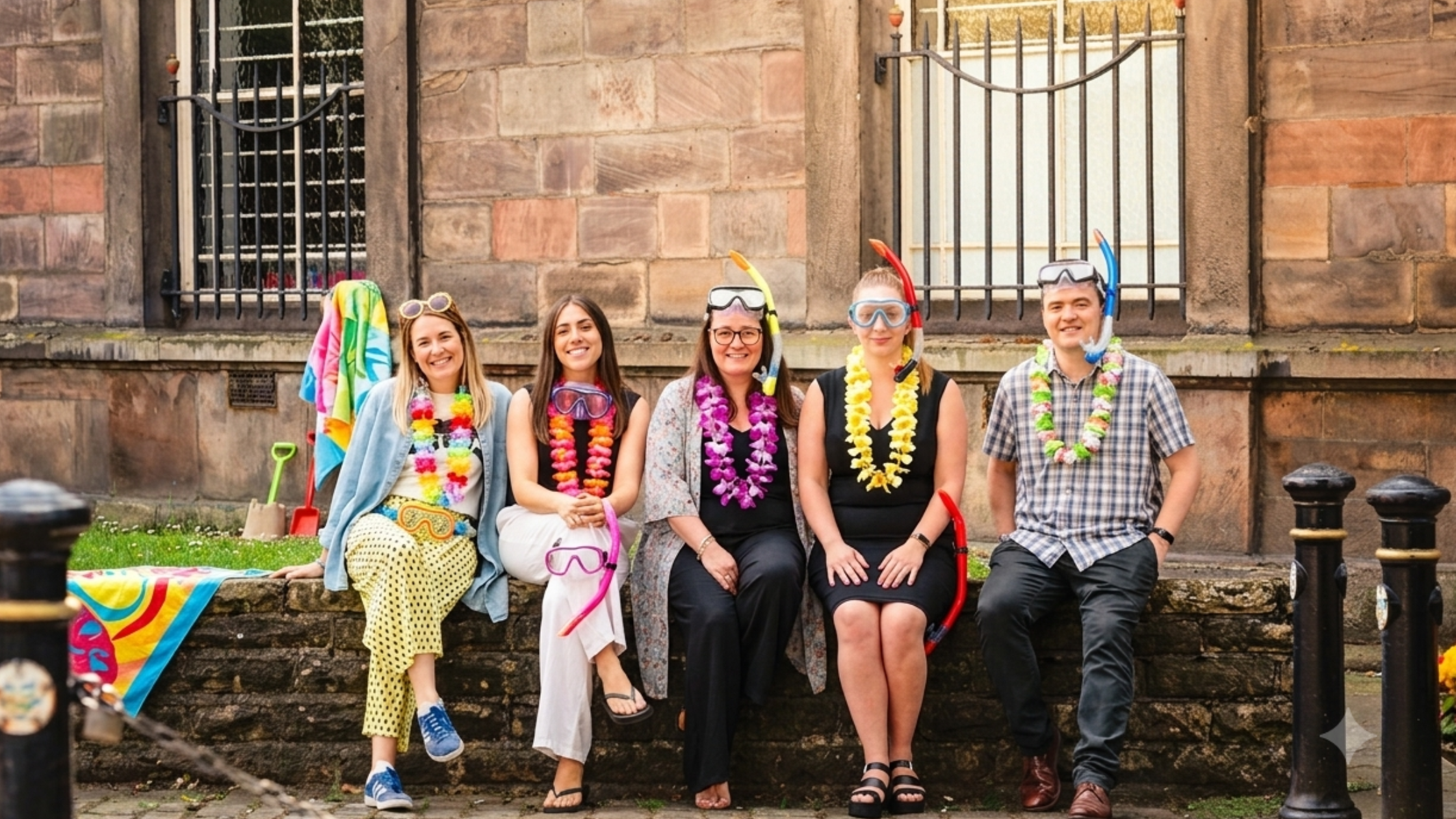
The great British summer can be difficult to predict.
You might get sunshine. You might get sideways rain. You might experience both while walking from the car to Tesco with your meal deal.
But there is one forecast we’re feeling rather confident about.
The forecast says there’s a 100% chance of quant!
Summer is often treated as market research’s quieter season. Diaries become a patchwork of annual leave, inboxes fill with out-of-office replies and arranging a meeting involving more than three people begins to require military-grade planning.
But while everyone else is trying to work out whether Claire is back before James goes away, consumers are still out there. Shopping, socialising, travelling, trying new things and forming opinions about all of it.
In fact, summer can create some particularly useful conditions for quantitative research.
People often have a little more downtime and greater flexibility in their routines. Longer days and better weather bring more people into high streets, retail parks, shopping centres, attractions and leisure destinations. That creates natural opportunities for people to stop, take part and tell you what they think.
Convenient, really, because opinions don’t tend to take six weeks off. 🤷🏼♀️
Quantitative research is all about gathering measurable information from a larger number of people. It helps businesses understand how many people think, feel or behave in a particular way, identify patterns across different groups and make decisions based on rather more than the opinion of whichever colleague happens to be standing nearest the kettle.
That might involve a national online survey, face-to-face interviews across several locations, product testing, exit surveys or intercept research conducted close to the point of purchase.
And summer can be a very good time to do it.
Of course, there isn’t a golden research rule stating that every quantitative project will perform better between June and August. Research rarely enjoys being that tidy.
The right timing will always depend on the audience, subject and methodology. Research involving teachers, for example, may need a rather different approach from a study speaking to festivalgoers. Good market research begins with understanding who you need to reach and when participation will be most realistic for them.
But in our experience of delivering quantitative market research fieldwork, a change in people’s usual routines can open up valuable opportunities.
Someone with a little time to spare may be more willing to complete an online survey or stop for a face-to-face interview. They’re also likely to give more considered answers than someone simultaneously attempting to board a train, answer an email and locate their left AirPod.
Then there are all those consumers venturing outdoors voluntarily.
When the weather improves, high streets, retail parks and shopping centres tend to become busier. For exit surveys and face-to-face intercept research, that means more opportunities to reach people in the right place and at precisely the right moment.
Instead of asking somebody to remember a shopping experience several weeks later, researchers can speak to them while it’s still fresh. What brought them there? What did they buy? What influenced the decision? What nearly put them off? Did the experience live up to expectations?
It’s real-time feedback from real consumers, gathered before “Ummmm I think it was quite good?” becomes the full extent of their recollection.
Speaking to people in context can also help market research teams include consumers who may be missed by an online-only approach. With trained fieldworkers, carefully designed questions and consistent quality controls, intercept research can gather structured, measurable data across several locations and provide a clearer view of how experiences differ between audiences.
And, with any luck, nobody has to shelter beneath a clipboard while the rain comes in sideways.
Summer also produces behaviours that simply can’t be understood quite as well from a desk in November.
People travel more. They socialise differently. They visit attractions, attend events, eat and drink different things and make purchases they may not consider during the colder months. Brands across retail, leisure, travel, hospitality, food and drink can measure those behaviours while they’re actually happening.
Quantitative research can explore seasonal purchasing habits, responses to summer campaigns, awareness and consideration, visitor satisfaction, event experiences and reactions to new products or concepts.
If summer matters commercially to your organisation, it makes sense to study it in summer. Asking people about their ice cream choices in November may still produce answers, but it does remove some of the atmosphere.
Online quantitative research can work particularly well during this period too. Participants can respond at a time that suits them, whether they’re at home, travelling or enjoying a brief interval in which nobody has asked them to join a video call.
Online surveys can help organisations reach larger or geographically dispersed audiences, compare responses between different groups and measure attitudes, behaviours and preferences at scale. When they’re supported by appropriate sampling, sensible quotas and robust participant verification, they can keep useful evidence moving even while internal diaries are scattered across multiple time zones and caravan parks.
That can make summer more than the awkward pause between two productive periods.
Run the fieldwork now and you can arrive in September with data ready to explore, decisions ready to make and something considerably more useful than a novelty fridge magnet. This is particularly valuable when autumn planning, campaign development or product decisions are already waiting in the wings.
Naturally, a sunny day does not replace a sound methodology.
Good quantitative research still requires a clearly defined research question, the right audience, carefully written and unbiased questions, reliable recruitment, appropriate quotas and consistent fieldwork. It needs proper quality checks, ethical data handling and a plan built around the decision the research is meant to support.
Timing creates the opportunity. Good research design turns responses into evidence you can trust.
At Acumen Fieldwork, we plan every quantitative research project around the people our clients need to reach and the practical realities of reaching them properly.
Sometimes that means speaking to consumers online across the UK. Sometimes it means trained fieldworkers working across several physical locations. Sometimes it means catching people at the point where their experience is most relevant, before they’ve had time to forget the detail or become distracted by lunch.
There is no single template for getting it right. The methodology should always follow the research question, rather than being chosen because it looks fetching in sunglasses.
But with the right audience, approach and fieldwork team, summer can be an excellent time to gather consumer opinions, measure real-world behaviour and build a clearer picture of what people are doing, and why it matters.
So, while the British weather remains anyone’s guess, the research outlook is looking rather more promising.
If you have a quantitative research project brewing this summer, speak to Acumen Fieldwork. We’ll help you reach the right people, choose the right approach and gather reliable answers at scale; whatever the weather decides to do.



Acumen Fieldwork named a finalist for Recruitment Excellence at the MRS Oppies 2026 There is […]
READ MORE
Recruiting beyond demographics: finding the full spectrum of AI attitudes in mental health When our […]
READ MORE
How purchase intent research gets beyond polite approval “They liked it.” Excellent. Put the champagne […]
READ MORE